
Real answers to real IELTS problems
Get free IELTS lessons every week
Short, practical and free. Join 500+ IELTS students. No spam, unsubscribe any time.
How to Fix Weak Body Paragraphs in IELTS Writing Task 2
Your IELTS body paragraph has three relevant ideas, but each gets only one sentence. By the end, the reader knows what you think but has little idea why. In my video, I use a question about whether the advantages of learning a foreign language in primary school outweigh the disadvantages...
Do You Need Expert Knowledge for IELTS Writing Task 2?
An IELTS essay question may ask about education, technology, work, or the environment. You might look at the topic and think: “I don’t know enough about this.” You don’t need expert knowledge. You need to answer the question with relevant ideas and explain them clearly. These practice examples show how to do that.
How Many Words Should You Write in IELTS Writing Task 2?
250 words is the minimum for IELTS Writing Task 2. But word count is only one part of your answer. You also need to answer the question, explain your ideas, and organize them clearly. My practical suggestion is to aim for around 260–270 words, then leave time to check your work.
False or Not Given in IELTS Reading? Learn the Difference
You find the right paragraph. You recognise the words. But you still cannot decide: False or Not Given? Ask yourself: Does the passage prove the statement wrong, or is some information missing? Let’s practise with official IELTS questions, then use a short routine you can try tonight.
IELTS Listening: Avoid These Spelling, Word Limit and Gap-Filling Mistakes
Sometimes you hear the right information but still lose the mark. The problem is what you write in the gap. You might misspell a word, exceed the word limit, or repeat a word the question already provides. Even a missing -s can turn a correct answer into an incorrect one.
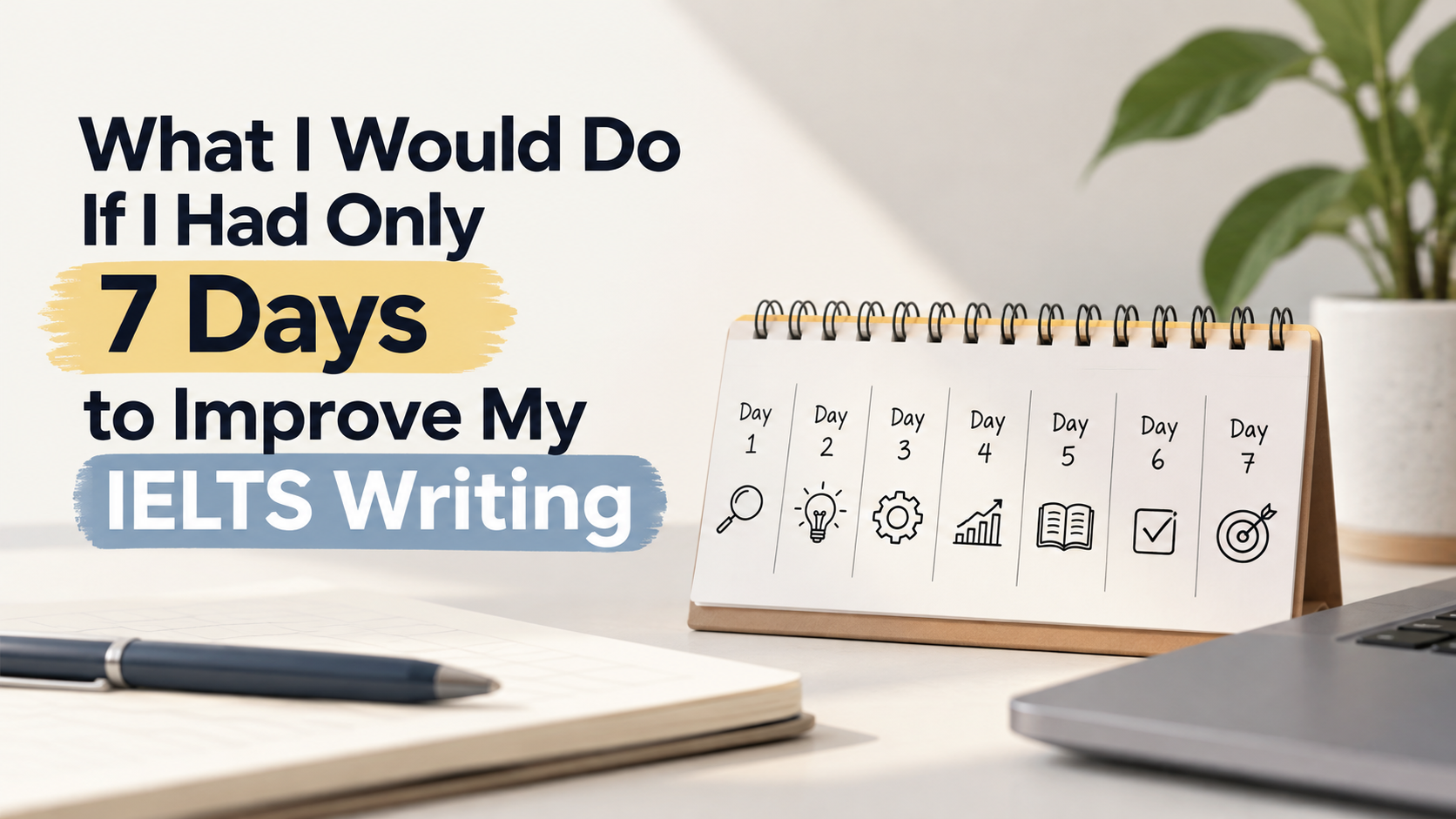
What I Would Do If I Had Only 7 Days to Improve My IELTS Writing
Imagine my IELTS test is in seven days. My Writing score is stuck at Band 6, but I need Band 7. I wouldn't waste time memorizing advanced vocabulary or writing endless essays. Instead, I would focus on the mistakes that are costing me marks and practice correcting them. Here’s exactly what I would do.
Do You Know How to Start Your IELTS Writing Task 2 Essay?
A good IELTS Writing Task 2 introduction doesn't need to be long or complicated. In most cases, two sentences are enough. In most cases, two sentences are enough: one to introduce the topic in your own words and another to answer the question. The problem is that many candidates either copy too much of the question, use unnatural paraphrases, or fail to make their position clear.
How to Develop Your Ideas in IELTS Writing Task 2 (With Examples)
Struggling to write enough in your body paragraphs? One of the most common problems in IELTS Writing Task 2 is having a relevant idea but not knowing what to write about it. You make a point, add a sentence or two, and then get stuck. Or you introduce a new idea because you can’t think of anything else to say.
How to Use Idioms Naturally in IELTS Speaking
If you’re aiming for Band 7 in IELTS, learning more vocabulary is important, but memorizing lists of advanced words and idioms isn’t enough. You need to use them naturally and in the right context. The IELTS assessment criteria reward a range of vocabulary, including less common expressions and appropriate collocations. It’s not just about what you know, but how well you use it.
Why Is Your IELTS Writing Score Stuck at Band 6?
You write an IELTS essay, check your grammar, learn a few new expressions, and try again. But when you get your result, your Writing score is still Band 6. The problem may be hiding in your essays.
Why You Understand IELTS Listening but Still Lose Marks
Do you finish an IELTS Listening test feeling that you understood most of the recording, but still get several answers wrong? This can be frustrating. You know many of the words, you understand the general meaning, and yet your score doesn’t improve.
What I would do if I had to improve my IELTS Speaking in 30 days
If I had only 30 days to improve my IELTS Speaking, I wouldn't spend my time memorizing model answers or answering hundreds of random questions.
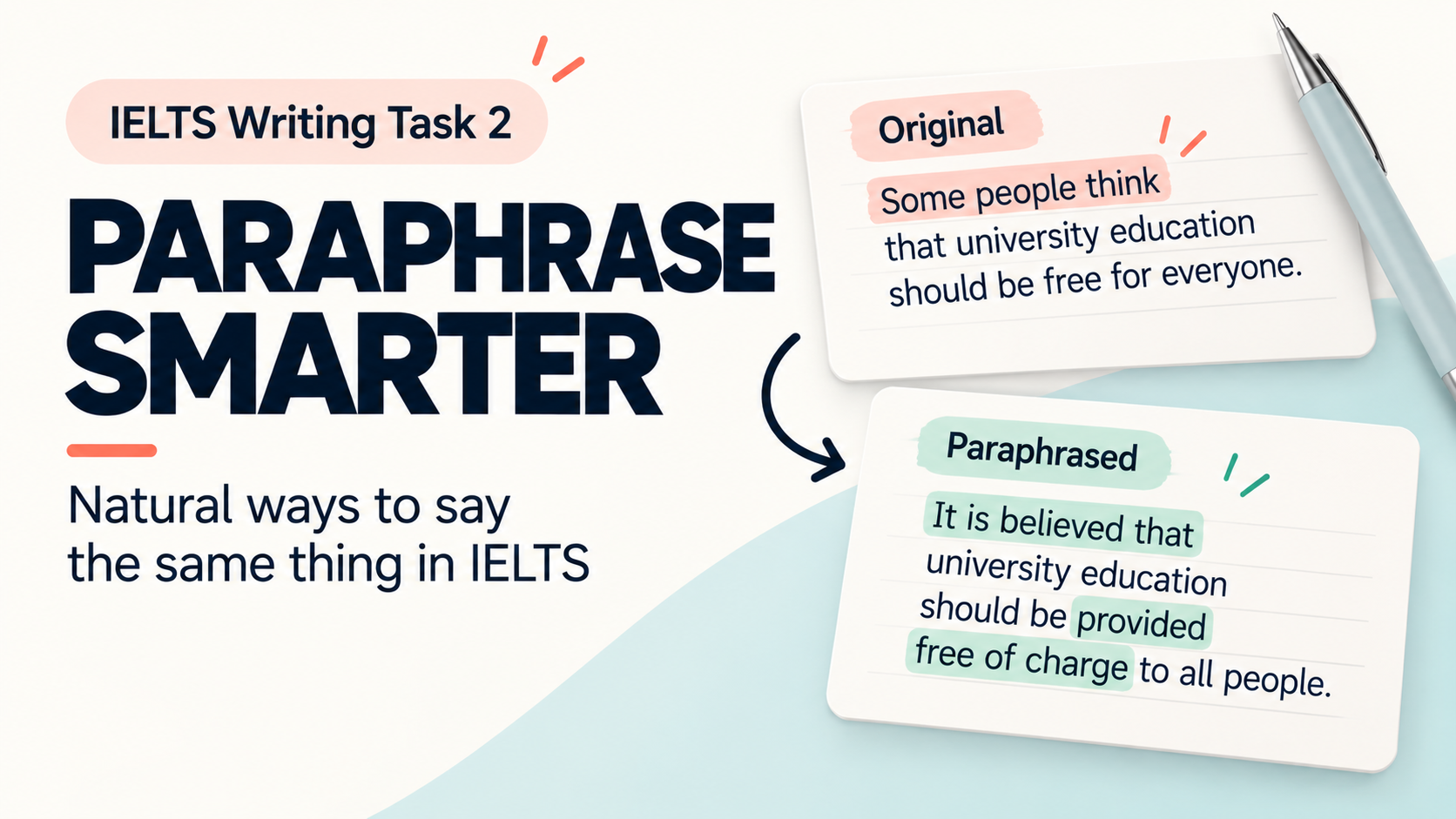
What Should You Actually Change When You Paraphrase IELTS Task 1?
You need to paraphrase the question in IELTS Writing Task 1, but you shouldn’t change every single word. When you replace every word with a synonym, your sentence can sound strange or unnatural.
19 Wrong Ideas About IELTS (and the Truth)
As an IELTS teacher, I hear these myths every week. Most are false, and believing them can cost you band points and months of study time.
If You Keep Getting Band 6 in Speaking, Read This
If you’ve taken IELTS Speaking more than once and keep getting Band 6, you probably know how frustrating it can be.
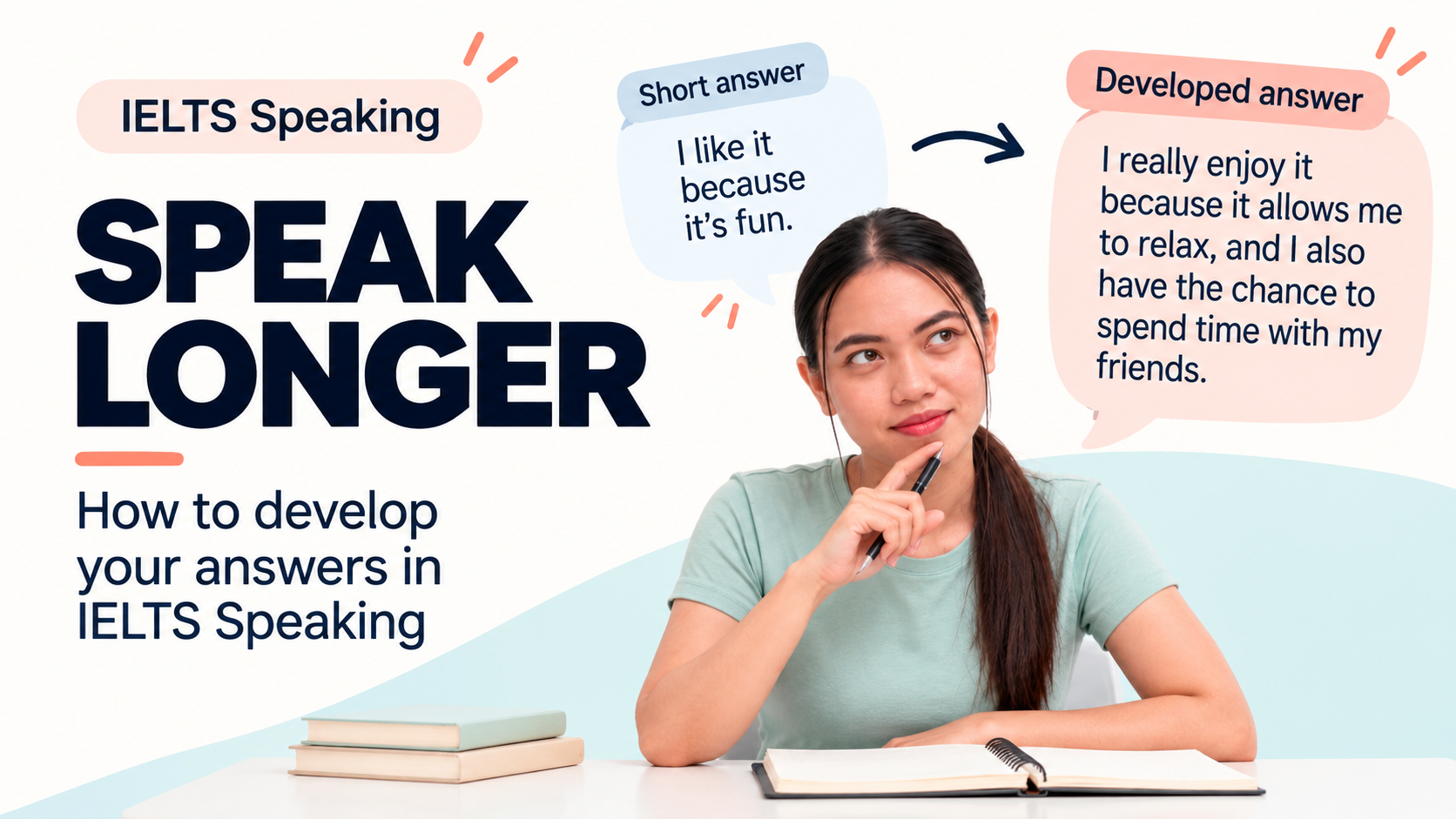
Why Your Speaking Answers Are Too Short
One of the most common problems I see in IELTS Speaking is very short answers. The examiner asks a question, the student answers it in one sentence, and then… nothing.
IELTS Writing Task 1: How to Improve Cohesion and Coherence
Good Cohesion and Coherence in IELTS Writing Task 1 is about more than using linking words. Learn simple ways to organise information, make clear comparisons, and create stronger connections between your sentences.
Is Connected Speech Important for Your IELTS Speaking Score?
The short answer is yes, connected speech is important. But let's be precise. Connected speech is not a separate IELTS scoring criterion. IELTS Speaking is assessed using four criteria: -Fluency and Coherence -Lexical Resource -Grammatical Range and Accuracy -Pronunciation
Not sure what is stopping your IELTS progress?
Take the free IELTS assessment and get your personal roadmap.