
How to Use Idioms Naturally in IELTS Speaking
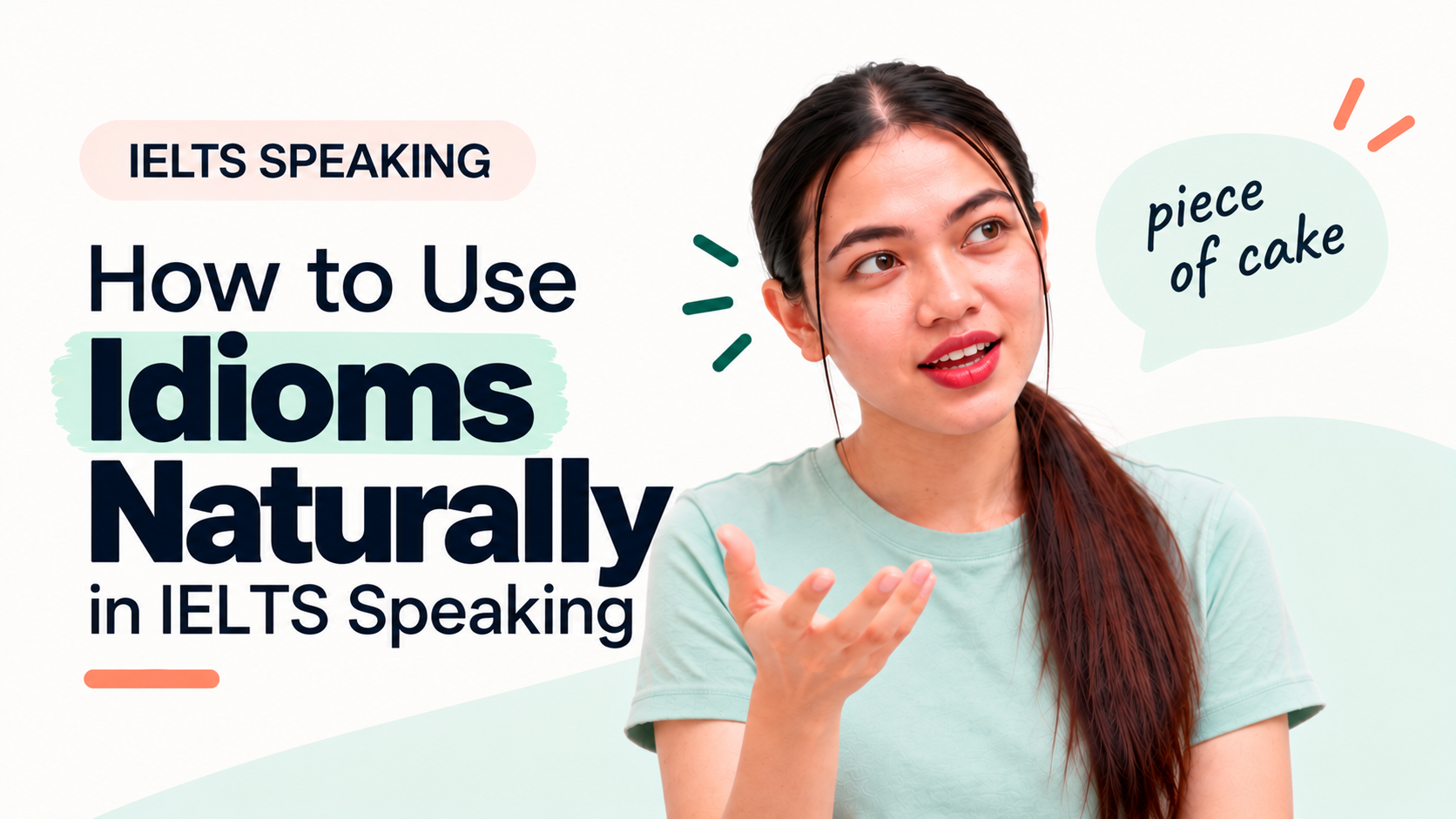
If you’re aiming for Band 7 in IELTS, learning more vocabulary is important. But memorizing lists of advanced words and idioms isn’t enough. You need to use them naturally and in the right context. The IELTS assessment criteria reward candidates who can use a range of vocabulary, including less common expressions, with awareness of collocation and appropriacy. In other words, it’s not just about what you know. It’s about how well you use it.
Let’s look at some practical examples.
1. Replace basic language with natural expressions
Imagine you’re answering this IELTS Speaking question:
Do you enjoy working in a team?
You could say:
Yes, I do. I think teamwork is important because everyone can help with the work.
This is clear, but the vocabulary is quite basic. Now look at this version:
Yes, definitely. I enjoy working in a team because everyone can pitch in and help with different tasks. As long as people pull their weight, I think teamwork can be much more effective than working alone.
Here are two useful expressions:
“Pitch in” means to help with an activity, especially by doing some of the work. And
“Pull your weight” means to do your fair share of the work or responsibility.
Notice that these expressions don’t make the answer unnecessarily complicated. They communicate familiar ideas in a more precise and natural way.
2. Learn expressions in context, not in isolation
Knowing the meaning of an idiom doesn’t automatically mean you know how to use it. For example, bite the bullet means to accept that you must do something difficult or unpleasant and finally do it. You might use it when answering this question:
What do you do when you face a difficult situation?
I usually try to solve the problem myself first. If I’ve been putting something off for too long, I eventually have to bite the bullet and deal with it.
Compare that with this:
I bit the bullet when I ate a delicious meal.
The second sentence doesn’t communicate the intended meaning. Eating a meal isn’t necessarily an unpleasant task you have been avoiding. When you learn a new expression, learn three things together: its meaning, the situations in which people use it, and an example sentence you could realistically say yourself.
3. Choose expressions that match the topic
Some idioms are useful in many situations, while others work only in particular contexts. For example, “go with the flow” means to accept a situation as it develops rather than trying to control everything. You could use it when discussing holidays or free-time activities:
When I go on holiday, I don’t usually plan every minute. I prefer to go with the flow and decide what to do when I get there.
Another useful expression is “get out of hand”, which means to become difficult to control.
Sometimes, a small disagreement can get out of hand if neither person is willing to listen.
You could use this expression when discussing arguments, social problems or difficult situations. The important point is to choose vocabulary that fits the question. Don’t try to squeeze the same idiom into every answer simply because you’ve memorized it.
4. Practise using the expressions yourself
Reading examples helps, but you also need to practise producing the language. Try answering these questions using the expressions in brackets. Don’t copy the example sentences above; think of your own experiences.
Question 1: Do you enjoy working with other people?
Try to use “pitch in or pull your weight”.
Question 2: Do you prefer to plan everything in advance?
Try to use “go with the flow”.
Question 3: Have you ever had to do something you were nervous about?
Try to use “bite the bullet”.
Question 4: Do disagreements sometimes become serious?
Try to use “get out of hand”.
Your sentences don’t need to be complicated. Focus on making the expression fit naturally into your answer. If it sounds forced, rewrite the sentence.
5. Should you use idioms in IELTS Writing too?
Be careful here. An expression that sounds natural in a conversation may be too informal for an academic essay. For example, in IELTS Speaking, you might naturally say:
The cost of living has got out of hand in some cities.
In IELTS Writing Task 2, a more formal version might be:
The cost of living has risen to a level that many residents can no longer afford.
Neither version is automatically better in every situation. The right choice depends on the task, your meaning, and the level of formality required. For academic writing, focus particularly on precise vocabulary and natural collocations. Don’t add idioms just to make your essay sound advanced.
Start using more natural English
You don’t need to learn hundreds of idioms to improve your Lexical Resource. Start with a small number of useful expressions, understand how they work, and practise using them in your own sentences.
I’ve created Natural English, a free tool to help you do exactly that. You can explore expressions that English speakers actually use and practise them in Learning and Test modes. If you’re aiming for Band 7 in Lexical Resource, remember that learning idioms isn’t enough. You need to know when and how to use them naturally. The goal isn’t to sound impressive. It’s to express your ideas clearly, naturally, and accurately.
Talk soon,
Iman
About the author

Teacher Iman
IELTS Specialist & Founder of IELTS TIME
- CELTA
- DELTA
- MA in English Language Teaching
- 15+ Years IELTS Teaching Experience
Not sure what is stopping your IELTS progress?
Take the free IELTS assessment and get your personal roadmap.
Related Articles

What I would do if I had to improve my IELTS Speaking in 30 days
If I had only 30 days to improve my IELTS Speaking, I wouldn't spend my time memorizing model answers or answering hundreds of random questions.
If You Keep Getting Band 6 in Speaking, Read This
If you’ve taken IELTS Speaking more than once and keep getting Band 6, you probably know how frustrating it can be.
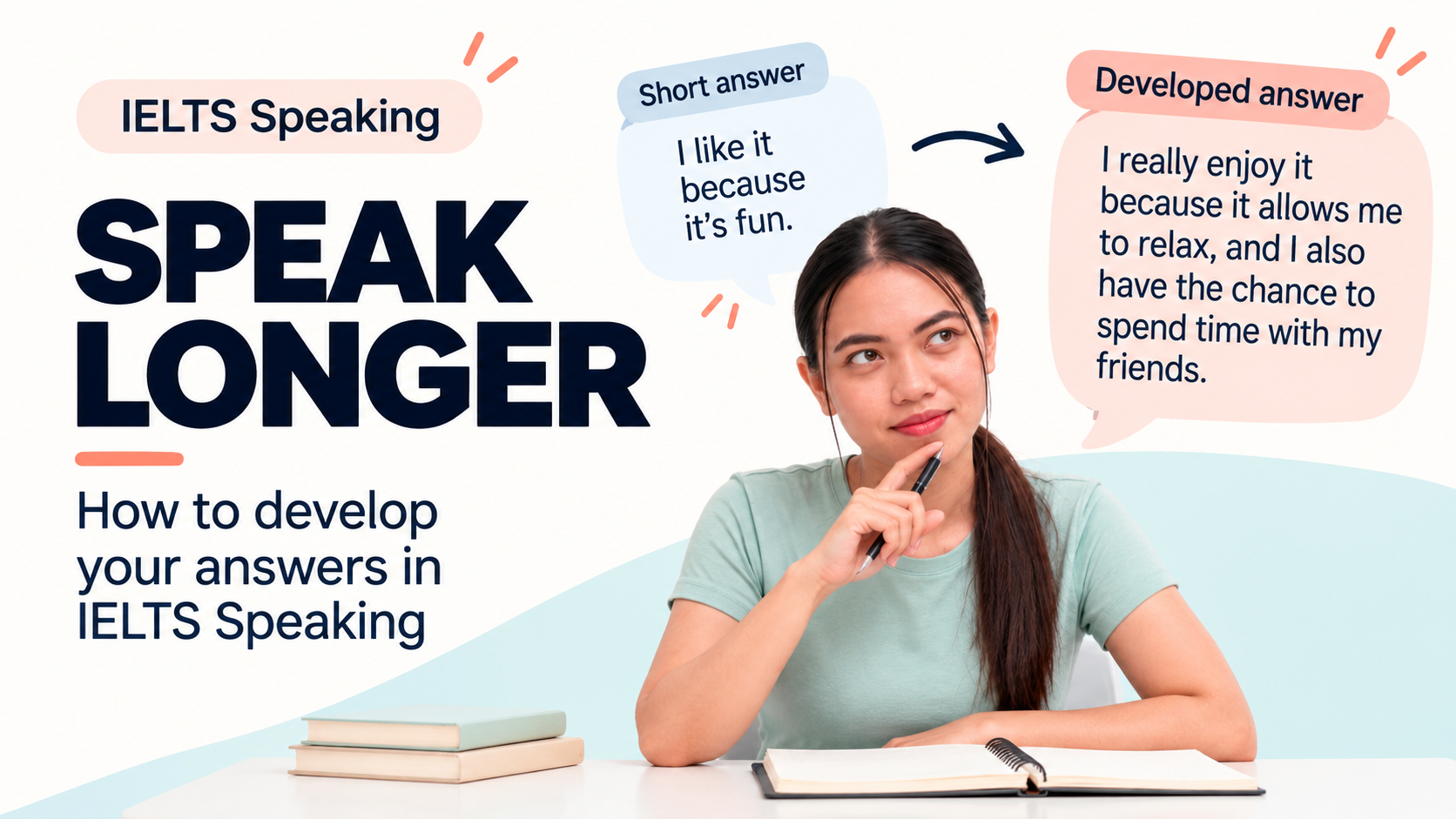
Why Your Speaking Answers Are Too Short
One of the most common problems I see in IELTS Speaking is very short answers. The examiner asks a question, the student answers it in one sentence, and then… nothing.
Questions & Comments
Have an IELTS question about this? Ask below — comments are reviewed before they appear.
No comments yet — be the first to ask a question.