
IELTS TIME Blog
IELTS Speaking
How Speaking is really assessed, and what raises a score.

How to Use Idioms Naturally in IELTS Speaking
If you’re aiming for Band 7 in IELTS, learning more vocabulary is important, but memorizing lists of advanced words and idioms isn’t enough. You need to use them naturally and in the right context. The IELTS assessment criteria reward a range of vocabulary, including less common expressions and appropriate collocations. It’s not just about what you know, but how well you use it.

What I would do if I had to improve my IELTS Speaking in 30 days
If I had only 30 days to improve my IELTS Speaking, I wouldn't spend my time memorizing model answers or answering hundreds of random questions.
If You Keep Getting Band 6 in Speaking, Read This
If you’ve taken IELTS Speaking more than once and keep getting Band 6, you probably know how frustrating it can be.
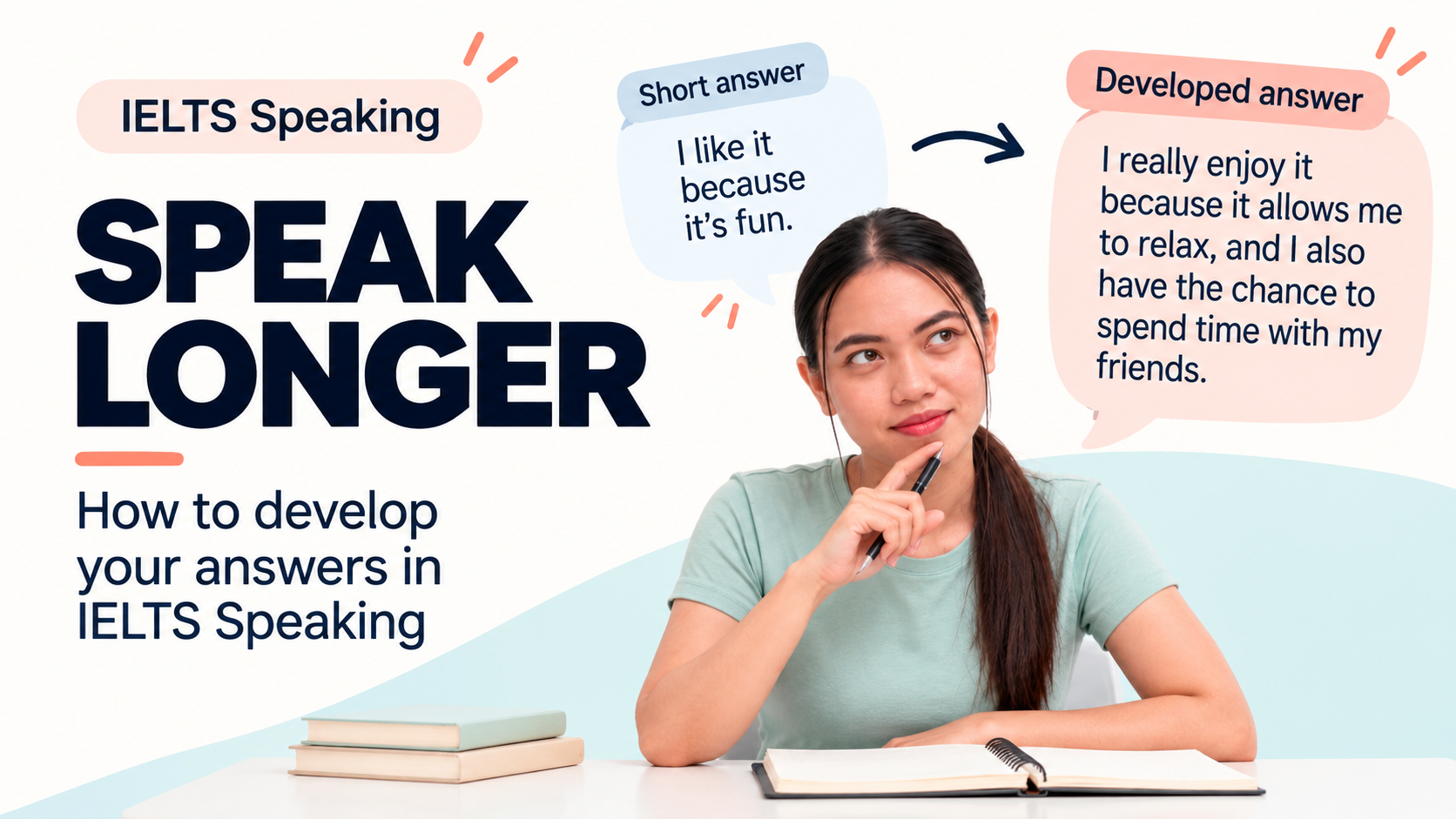
Why Your Speaking Answers Are Too Short
One of the most common problems I see in IELTS Speaking is very short answers. The examiner asks a question, the student answers it in one sentence, and then… nothing.

Is Connected Speech Important for Your IELTS Speaking Score?
The short answer is yes, connected speech is important. But let's be precise. Connected speech is not a separate IELTS scoring criterion. IELTS Speaking is assessed using four criteria: -Fluency and Coherence -Lexical Resource -Grammatical Range and Accuracy -Pronunciation
Not sure what is stopping your IELTS progress?
Take the free IELTS assessment and get your personal roadmap.